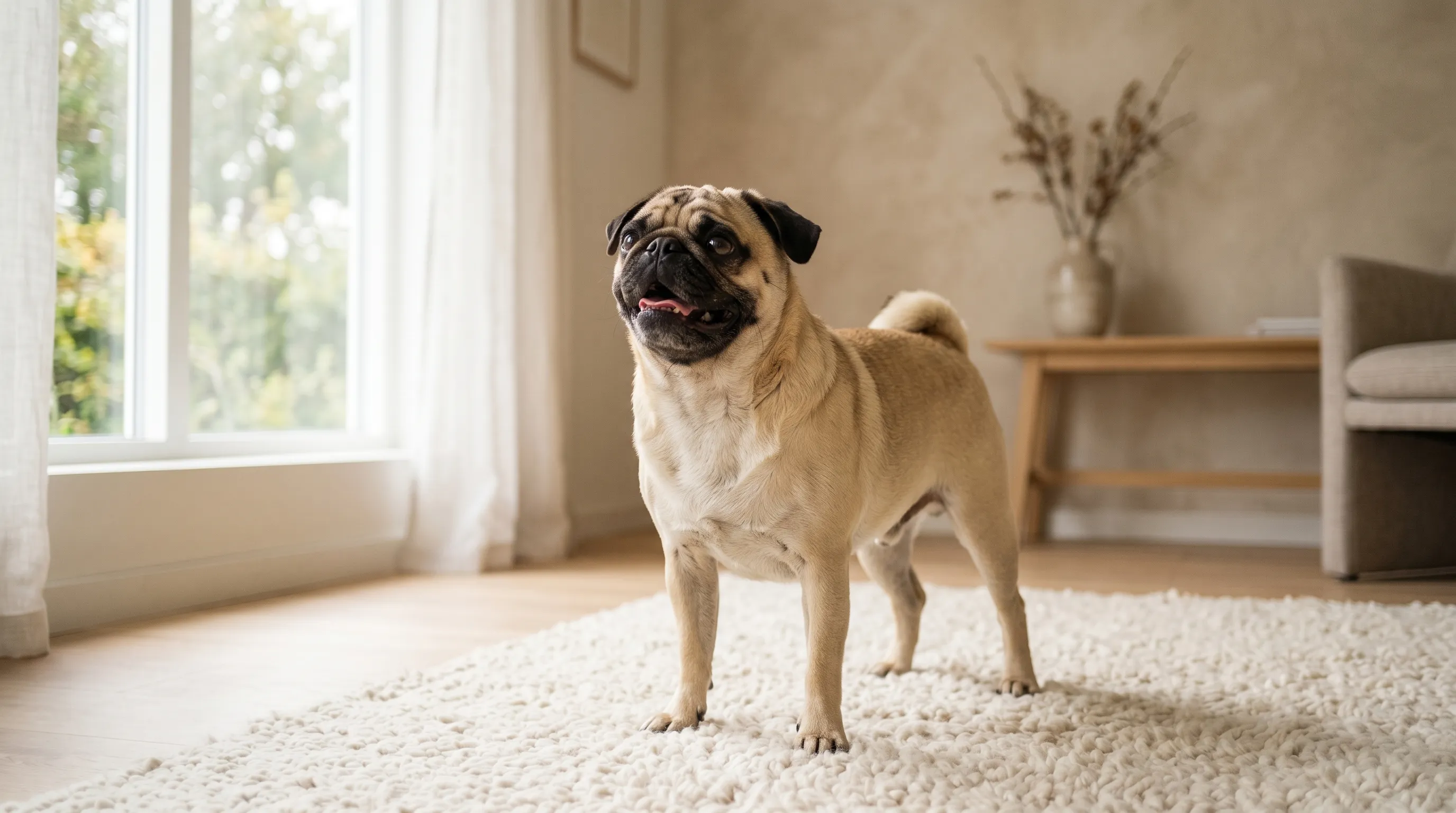
Fat Dog: What's Actually Going On
If your dog is overweight, you're in the majority — APOP's vet survey put US canine overweight/obesity at 59%. Here's the honest, vet-backed answer.
Verified April 2026: The Association for Pet Obesity Prevention's most recent veterinary clinical survey put US dog overweight/obesity prevalence at 59%. That's roughly 56 million dogs. If your dog is one of them, you're in the majority. The good news: canine weight loss has a much higher success rate than human weight loss because dogs don't have the willpower problem. They have the portion problem. Fix the portions, fix the dog.
The bad news: a 2019 University of Liverpool / WALTHAM study analyzing 50,787 dogs found that overweight dogs lived up to 2.5 years less than dogs at ideal body weight, with the effect varying by breed (about 5 months less for German Shepherds to roughly 2.5 years less for Yorkshire Terriers). Overweight dogs are also more likely to develop arthritis and other health conditions. This isn't just about how your dog looks — it's the single largest preventable factor in your dog's health span.
How to Tell If Your Dog Is Actually Fat
Most owners can't accurately judge their dog's body condition by looking. The veterinary standard for assessing canine body condition is the 9-point Body Condition Score (BCS) scale. Vets use this in every wellness exam.
| BCS | Description | What You'll See |
|---|---|---|
| 1-3 | Underweight | Ribs, spine, hip bones visible. No body fat. Severe muscle loss. |
| 4-5 | Ideal | Ribs easily felt without pressing. Visible waist from above. Abdominal tuck from side. |
| 6 | Overweight | Ribs felt with slight pressure. Waist barely visible. Slight fat layer over ribs. |
| 7 | Heavy | Ribs hard to feel. Waist absent. Noticeable abdominal distension. |
| 8 | Obese | Ribs not palpable. Heavy fat over ribs. Round appearance from above. |
| 9 | Severely obese | Massive fat deposits. No waist. Distended abdomen. Often immobile. |
Why Your Dog Got Fat
The most common cause of canine obesity is overfeeding. Specifically:
- Following the food bag's portion guide. The amounts listed on dog food packaging are calibrated for active adult dogs at ideal weight — often more food than your specific dog needs.
- Free-feeding (leaving food out all day). Dogs are descended from opportunistic scavengers who eat whenever food is available. Free-feeding overrides natural satiety.
- Treats above ~10% of daily calories. Veterinary nutrition guidance is to keep treats under 10% of total daily calories. Bully sticks and other high-calorie chews can blow past this quickly.
- Table scraps. Even small amounts of human food are calorically dense for dogs. A few bites of cheese or chicken adds up over weeks.
- Reduced exercise. Many dogs were getting plenty of exercise as puppies/young adults but had activity tapered off without a corresponding food reduction.
Less commonly, weight gain is caused by underlying medical conditions: hypothyroidism (more common in middle-aged dogs of certain breeds), Cushing's disease (cortisol overproduction), insulin resistance, or pain that limits exercise. Your vet can rule these out with a basic blood panel. If your dog has gained significant weight despite no diet changes, it's worth a vet visit.
The 4-Step Method That Works
- Confirm the BCS. Use our free Body Condition Score tool or have your vet score your dog at the next visit. You need to know the starting point to measure progress.
- Switch to a vet-formulated weight management food. Don't just feed less of your current food — your dog will be visibly hungry. Weight management foods reduce calorie density while increasing protein and fiber for satiety. See top picks.
- Calculate portions for IDEAL weight, not current weight. The standard veterinary formula is RER (Resting Energy Requirement) = 70 × (ideal weight in kg)^0.75. For weight loss, vets typically feed at 1.0× RER. Talk to your vet for your specific dog's target.
- Walk twice a day, gradually building. Start with shorter walks twice daily. Increase incrementally over several weeks. For severely overweight dogs, swimming or hydrotherapy is ideal because it's zero-impact on arthritic joints.
What NOT to Do
- •Don't crash diet. Vets generally recommend safe canine weight loss at 1-2% body weight per week, not more.
- •Don't skip meals. Dogs need consistent feeding schedules. If you need to reduce calories, reduce portion sizes per meal, not number of meals.
- •Don't give human Ozempic, Wegovy, or any GLP-1 medication. Not approved for dogs, dosing is unknown, and dogs have a recognized pancreatitis risk that GLP-1s could amplify.
- •Don't trust the food bag's portion guide alone. Calculate based on ideal weight using the RER formula, or ask your vet for a specific target.
- •Don't ignore treats. Track every treat. Treats should be under ~10% of daily calories per veterinary nutrition guidance.
How Long Will It Take?
At a healthy weight loss rate of 1-2% body weight per week, most dogs reach their ideal weight in 3-12 months depending on starting point. A 60-pound dog who needs to reach 50 pounds (a 16% reduction) would take roughly 8-16 weeks. A 90-pound dog who needs to reach 60 pounds (a 33% reduction) would take 16-33 weeks. Slower is better than faster — the goal is sustainable, not dramatic.
Frequently Asked Questions
Why is my dog so fat?+
How much weight should a fat dog lose per week?+
What's the fastest way to slim down an obese dog?+
Can a fat dog still be healthy?+
Is there a medication that helps fat dogs lose weight?+
Related
Veterinary disclaimer:This article is for informational purposes only and does not constitute veterinary advice. Always consult a licensed veterinarian before changing your dog's diet, exercise routine, or medication. Information is current as of the publication date but pet pharmaceutical and food formulation details may change.
Looking for human GLP-1 medications instead?
See our 40 verified GLP-1 telehealth providers →