By Iacob Pastina, Independent Researcher
Foods to Avoid on Ozempic & Other GLP-1 Medications
Certain foods can make GLP-1 side effects dramatically worse. Learn which foods to avoid on Ozempic, Wegovy, and Zepbound — plus what to eat instead for better tolerance and results.
Summarize this article with
If you've recently started Ozempic, Wegovy, Zepbound, or another GLP-1 medication, you've probably already noticed that your relationship with food has changed. Foods you used to enjoy without a second thought may now leave you feeling nauseous, bloated, or worse. That's not a coincidence — it's a direct consequence of how these medications work.
GLP-1 receptor agonists fundamentally alter how your digestive system processes food. Understanding which foods to avoid on Ozempic and other GLP-1s can be the difference between a manageable adjustment period and weeks of misery. This guide breaks down exactly what to skip, what to eat instead, and how to build a week-by-week eating strategy that works with your medication — not against it.
Why GLP-1 Medications Change How Your Body Handles Food
Before diving into specific foods to avoid on Ozempic and similar medications, it helps to understand the mechanism behind the discomfort. GLP-1 receptor agonists like semaglutide (Ozempic, Wegovy) and tirzepatide (Mounjaro, Zepbound) work partly by slowing gastric emptying — the rate at which food moves from your stomach into your small intestine.
In a person not taking GLP-1 medications, a typical meal empties from the stomach within 2-4 hours. On semaglutide, studies published in Diabetes, Obesity and Metabolism show gastric emptying can be delayed by 25-40%, meaning food sits in your stomach significantly longer. This delayed emptying is actually one of the therapeutic mechanisms — it keeps you feeling full — but it also means your stomach is more sensitive to foods that are hard to digest, produce gas, or stimulate acid production.
When you eat a food that already takes a long time to digest (like a high-fat meal), and your stomach is already emptying 30-40% slower than normal, the result is predictable: nausea, bloating, acid reflux, and sometimes vomiting. The good news is that this effect is most pronounced during dose escalation and typically improves over time. The foods to avoid on Ozempic during your first few months may not bother you at all six months later.
Foods That Make Nausea Worse: High-Fat, Greasy, and Fried Foods
High-fat foods are the single biggest dietary trigger for GLP-1-related nausea. Fat is already the slowest macronutrient to digest — it takes 6-8 hours for a high-fat meal to fully empty from the stomach. Combine that with medication-induced delayed gastric emptying, and you're essentially asking your stomach to hold onto food far longer than it's designed to.
- •Fried foods — french fries, fried chicken, onion rings, tempura, doughnuts. These are coated in oil that dramatically slows digestion.
- •Greasy fast food — burgers, pizza with heavy cheese, nachos, loaded burritos. The combination of fat and large portion sizes is particularly problematic.
- •High-fat dairy — heavy cream, full-fat cheese in large quantities, butter-heavy dishes, cream-based soups and sauces.
- •Fatty cuts of meat — ribeye steak, pork belly, bacon, sausage, and heavily marbled meats.
- •Rich desserts — cheesecake, ice cream, pastries with butter cream, chocolate mousse.
A 2023 study in Gastroenterology00782-X/fulltext) examining dietary patterns in GLP-1 users found that patients who reduced fat intake to under 30% of total calories reported 40-50% fewer nausea episodes compared to those maintaining a standard American diet. This doesn't mean you need to go fat-free — healthy fats from avocado, olive oil, and nuts in small amounts are fine — but large, greasy meals are reliably the worst trigger.
Foods That Cause Dumping-Like Symptoms: Sugar and Refined Carbs
While GLP-1 medications technically don't cause dumping syndrome (that's specific to gastric surgery), many patients experience very similar symptoms after eating high-sugar or heavily refined carbohydrate foods. The mechanism is related: when a large sugar load eventually does hit the small intestine, it can cause rapid fluid shifts, cramping, diarrhea, lightheadedness, and sweating.
- •Sugary drinks — regular soda, sweet tea, fruit juices with added sugar, energy drinks, sweetened coffee drinks. Liquid sugar hits the gut fast even with delayed emptying.
- •Candy and sweets — gummy bears, hard candy, chocolate bars, caramel. Pure sugar on a GLP-1 is almost guaranteed to cause discomfort.
- •Baked goods — white bread, pastries, cinnamon rolls, muffins, cookies. These combine refined flour and sugar — a double trigger.
- •Sugary breakfast cereals — most boxed cereals, flavored oatmeal packets, granola with added sugar.
- •Syrups and sweetened condiments — pancake syrup, honey in large amounts, barbecue sauce, ketchup in excess.
As detailed in our beginner's guide to GLP-1 medications, these drugs also regulate blood glucose by stimulating insulin release. When you eat a high-sugar food, the medication amplifies the insulin response, which can cause a rapid blood sugar drop. The result feels like a sugar crash on steroids — shakiness, sweating, nausea, and fatigue.
Drinks to Limit: Alcohol, Carbonation, and Caffeine
What you drink matters just as much as what you eat on GLP-1 medications. Three categories of beverages deserve special attention.
| Beverage | Why It's Problematic | Safer Alternative |
|---|---|---|
| Alcohol (beer, wine, spirits) | Increased hypoglycemia risk, worsens nausea, delays gastric emptying further, impairs judgment around food choices | Sparkling water with lime, or limit to 1 small glass with food |
| Carbonated drinks (soda, seltzer) | Gas distension in an already slow-emptying stomach causes bloating, pain, and reflux | Still water, herbal tea, infused water |
| High-caffeine beverages (coffee, energy drinks) | Stimulates stomach acid production, can worsen reflux and nausea, acts as a diuretic when hydration is critical | Green tea (lower caffeine), decaf coffee, warm water with lemon |
| Sugary juices and smoothies | Concentrated sugar load causes insulin spikes and GI distress | Whole fruit in small portions, vegetable-based smoothies |
Alcohol deserves particular caution. The FDA prescribing information for Wegovy notes that semaglutide can increase the risk of hypoglycemia, and alcohol independently lowers blood sugar. Combined, this creates a higher risk of dangerously low blood sugar episodes. Additionally, because GLP-1s slow gastric emptying, alcohol may be absorbed more erratically — some patients report getting intoxicated faster or experiencing worse hangovers.
The biggest priority is hydration. GLP-1 medications can cause dehydration through reduced food intake, nausea-related avoidance of drinking, and diarrhea. Aim for at least 64 ounces of water daily — more if you're experiencing vomiting or diarrhea. Many providers we've reviewed, including Ro and Hims & Hers, specifically emphasize hydration in their patient onboarding materials.
Portion Sizes Matter More Than Ever
Even "safe" foods can trigger side effects if you eat too much at once. With delayed gastric emptying, your stomach's functional capacity is effectively reduced. Eating a normal-sized pre-medication meal when your stomach is emptying 30-40% slower is like trying to fill a glass that's already half full.
- •Eat 4-6 small meals instead of 3 large ones. Each meal should be roughly the size of your fist — about 1 to 1.5 cups of food.
- •Stop eating before you feel full. On GLP-1s, the sensation of fullness is delayed. If you eat until you feel satisfied, you've likely eaten too much. Stop at about 70-80% full.
- •Eat slowly. Take at least 20 minutes per meal. Put your fork down between bites. This gives your brain time to register fullness signals, which GLP-1s amplify.
- •Don't drink large volumes of liquid with meals. Sip water throughout the day instead. A full glass of water with a meal can push your stomach over its comfort threshold.
- •Use smaller plates and bowls. This sounds trivial but it's one of the most effective behavioral tricks. A full small plate feels more satisfying than a half-empty large plate.
Our guide on what to expect in your first month on a GLP-1 covers the dose escalation schedule in detail — your portion tolerance will generally improve as your body adapts to each new dose level.
What TO Eat: Foods That Work With GLP-1 Medications
Now for the good news. Plenty of foods are not only well-tolerated on GLP-1 medications but actually help you get the most out of treatment. The goal is to maximize nutrition per calorie, since you'll naturally be eating less.
| Food Category | Best Choices | Why It Works |
|---|---|---|
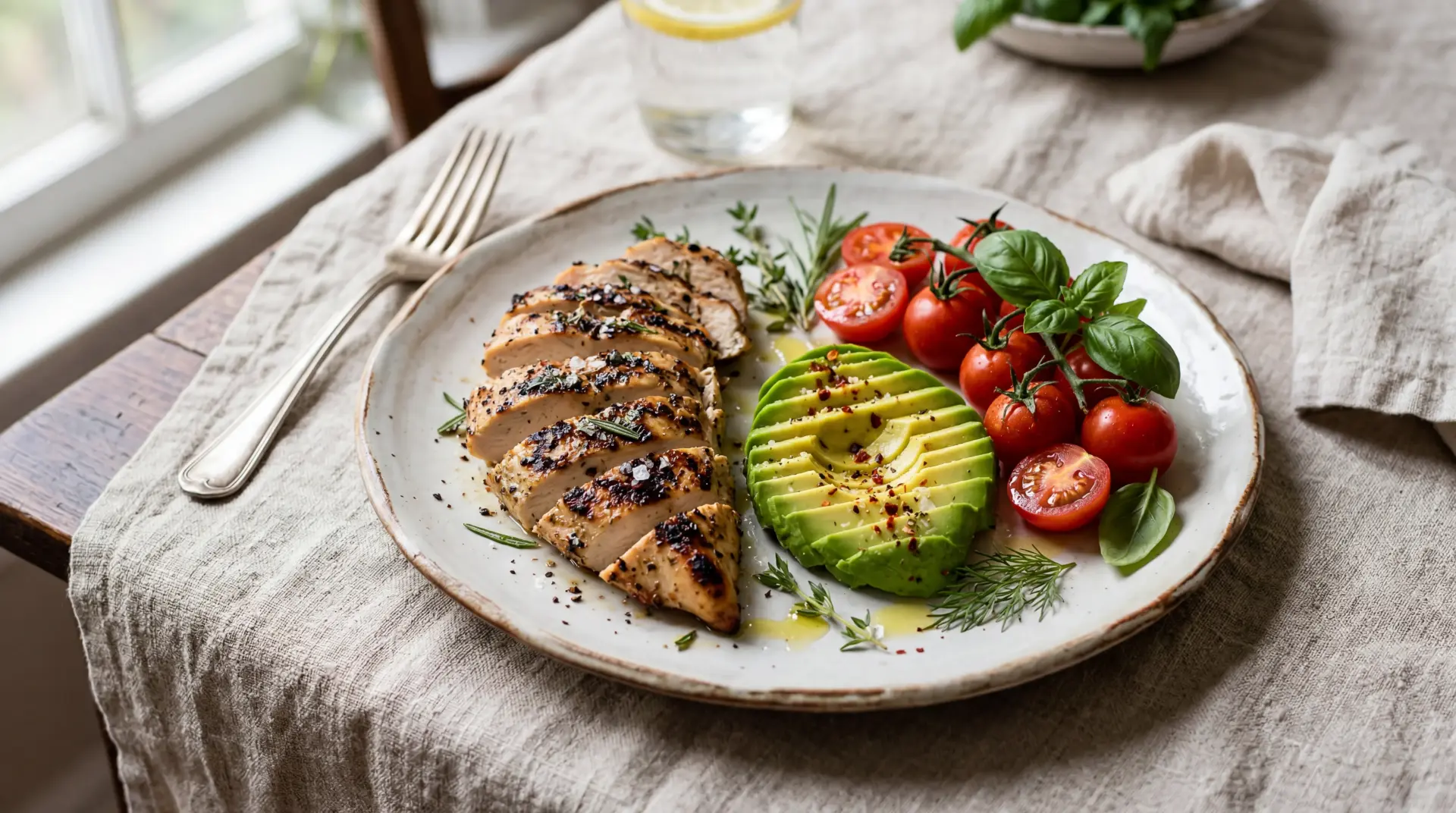
| Lean proteins | Chicken breast, turkey, fish (salmon, cod, tilapia), egg whites, tofu, Greek yogurt | Protein preserves muscle mass during weight loss, keeps you full, and is easier to digest than fatty meats |
| Cooked vegetables | Steamed broccoli, roasted zucchini, cooked carrots, sauteed spinach, baked sweet potato | Cooking breaks down fiber, making vegetables gentler on a slow-emptying stomach. Raw veggies can cause gas and bloating. |
| Bland starches | White rice, plain pasta, oatmeal, crackers, toast, potatoes (not fried) | Easy to digest, unlikely to trigger nausea, and good for settling the stomach on high-nausea days |
| Hydrating foods | Watermelon, cucumber, broth-based soups, popsicles (sugar-free), gelatin | Help maintain hydration, which is critical when appetite is reduced and fluid intake may drop |
| Healthy fats (small amounts) | Half an avocado, 1 tbsp olive oil, small handful of almonds | Provide essential fatty acids and fat-soluble vitamin absorption without overloading digestion |
A practical framework: build every meal around a palm-sized portion of lean protein, add a fist-sized portion of cooked vegetables or bland starch, and include a thumb-sized amount of healthy fat. This structure naturally keeps meals small, balanced, and GLP-1 friendly.
Week-by-Week Eating Strategy for Your First Month
Your first month on a GLP-1 medication is typically the hardest from a dietary perspective. Here's a practical week-by-week approach that aligns with the standard dose escalation schedules used by providers like Hims & Hers and Ro.
Week 1 — The BRAT+ approach. Your body is adjusting to the medication. Stick to the most easily digestible foods: bananas, rice, applesauce, toast, plus lean proteins like baked chicken or fish. Eat 5-6 tiny meals. Sip water constantly. Avoid all fried foods, alcohol, and carbonated drinks. Don't worry about "eating healthy" — just focus on keeping food down and staying hydrated.
Week 2 — Gradual expansion. If nausea is manageable, begin adding cooked vegetables (steamed broccoli, roasted carrots, sauteed zucchini) and soft proteins (scrambled eggs, Greek yogurt, cottage cheese). Continue avoiding high-fat and fried foods. Try eating 4-5 small meals instead of 5-6.
Week 3 — Testing tolerance. Start reintroducing foods one at a time. Try a small salad with grilled chicken. Have a modest portion of whole grain pasta. A small serving of cheese. Pay attention to what triggers symptoms — everyone's trigger foods are slightly different. Keep a simple food diary noting what you ate and how you felt 1-2 hours later.
Week 4 — Establishing your pattern. By now you should have a good sense of your personal trigger foods and tolerable portion sizes. Most patients find they can eat a wider variety of foods in smaller amounts. This is typically when your provider will increase your dose — which may temporarily bring back some nausea. If that happens, return to Week 1 strategies for a few days, then gradually expand again.
Foods to Avoid on Ozempic vs. Tirzepatide — Is There a Difference?
The dietary recommendations are broadly the same for all GLP-1 medications, but there are some nuances worth noting. The SURMOUNT-5 head-to-head trial showed that tirzepatide (Zepbound/Mounjaro) actually had lower GI side effect rates than semaglutide (Wegovy/Ozempic) — 2.7% GI-related discontinuation vs. 5.6%.
This suggests tirzepatide users may have slightly more dietary flexibility, but the core principles remain identical: avoid high-fat foods, limit sugar, eat small portions, stay hydrated. Whether you're on semaglutide or tirzepatide, the foods to avoid are the same — the degree of sensitivity may simply differ. For a detailed comparison of these two medications, see our semaglutide vs. tirzepatide breakdown.
When to Talk to Your Doctor
Dietary modifications can resolve most GLP-1-related GI symptoms, but some situations require medical attention. Contact your prescribing provider if:
- •Nausea or vomiting persists for more than 72 hours despite eating bland foods and staying hydrated
- •You can't keep any food or water down for more than 24 hours — dehydration is a serious risk
- •Severe abdominal pain that doesn't resolve with dietary changes — this could indicate pancreatitis, a rare but serious side effect listed in the Wegovy prescribing information
- •Signs of dehydration — dark urine, dizziness, rapid heartbeat, dry mouth that persists despite drinking water
- •Significant constipation lasting more than a week — fiber supplements or a stool softener may be needed
- •Unintended rapid weight loss of more than 1-2 pounds per week consistently — your provider may need to adjust your dose
Most telehealth GLP-1 providers include ongoing check-ins and messaging with clinicians. If you're looking for a provider that offers strong nutritional guidance alongside prescriptions, explore our provider rankings or take our eligibility quiz to find the best fit for your needs.
Sources
- •Wegovy (semaglutide) Prescribing Information — FDA/Novo Nordisk, updated 2025
- •STEP 1 Trial: Once-Weekly Semaglutide in Adults with Overweight or Obesity — Wilding et al., New England Journal of Medicine, 2021
- •SURMOUNT-5 Trial: Tirzepatide vs Semaglutide for Obesity — Rodriguez et al., New England Journal of Medicine, 2024
- •Effect of Semaglutide on Gastric Emptying — Diabetes, Obesity and Metabolism, 2023
- •Dietary Patterns and GI Tolerability in GLP-1 Receptor Agonist Users00782-X/fulltext) — Gastroenterology, 2023
- •Zepbound (tirzepatide) Prescribing Information — FDA/Eli Lilly, 2023
Medical Disclaimer: This article is for informational purposes only and does not constitute medical advice. Always consult with a qualified healthcare provider before starting any medication. Information is current as of the publication date but may change.
Affiliate Disclosure: Some links in this article are affiliate links. We may earn a commission if you sign up through our links, at no extra cost to you.