GLP-1 Patches for Weight Loss: Do They Actually Work? (2026 Fact Check)
GLP-1 patches sold online don't contain semaglutide or tirzepatide, they're herbal supplements. Here's what the science says and what actually works.
Summarize this article with
Key takeaway
GLP-1 patches sold online don't contain semaglutide or tirzepatide, they're herbal supplements. Here's what the science says and what actually works.
In this article
GLP-1 patches sold online do not contain semaglutide, tirzepatide, or any FDA-approved GLP-1 medication. They are over-the-counter herbal supplements marketed with names designed to evoke pharmaceutical GLP-1 drugs, but they contain ingredients like berberine, chromium, green tea extract, or Garcinia cambogia, none of which activate GLP-1 receptors the way prescription medications do. No GLP-1 patch has been FDA-approved, and no clinical trial has demonstrated that a transdermal patch can deliver GLP-1 receptor agonists effectively in humans. If you want actual GLP-1-based weight loss treatment, prescription options through telehealth start at $99/month for semaglutide and $149/month for tirzepatide.
Your next useful step
Use the related guide to prepare your questions. Changes to medication or dosing belong with your prescriber.
Understand prescription GLP-1 options →What Are GLP-1 Patches?
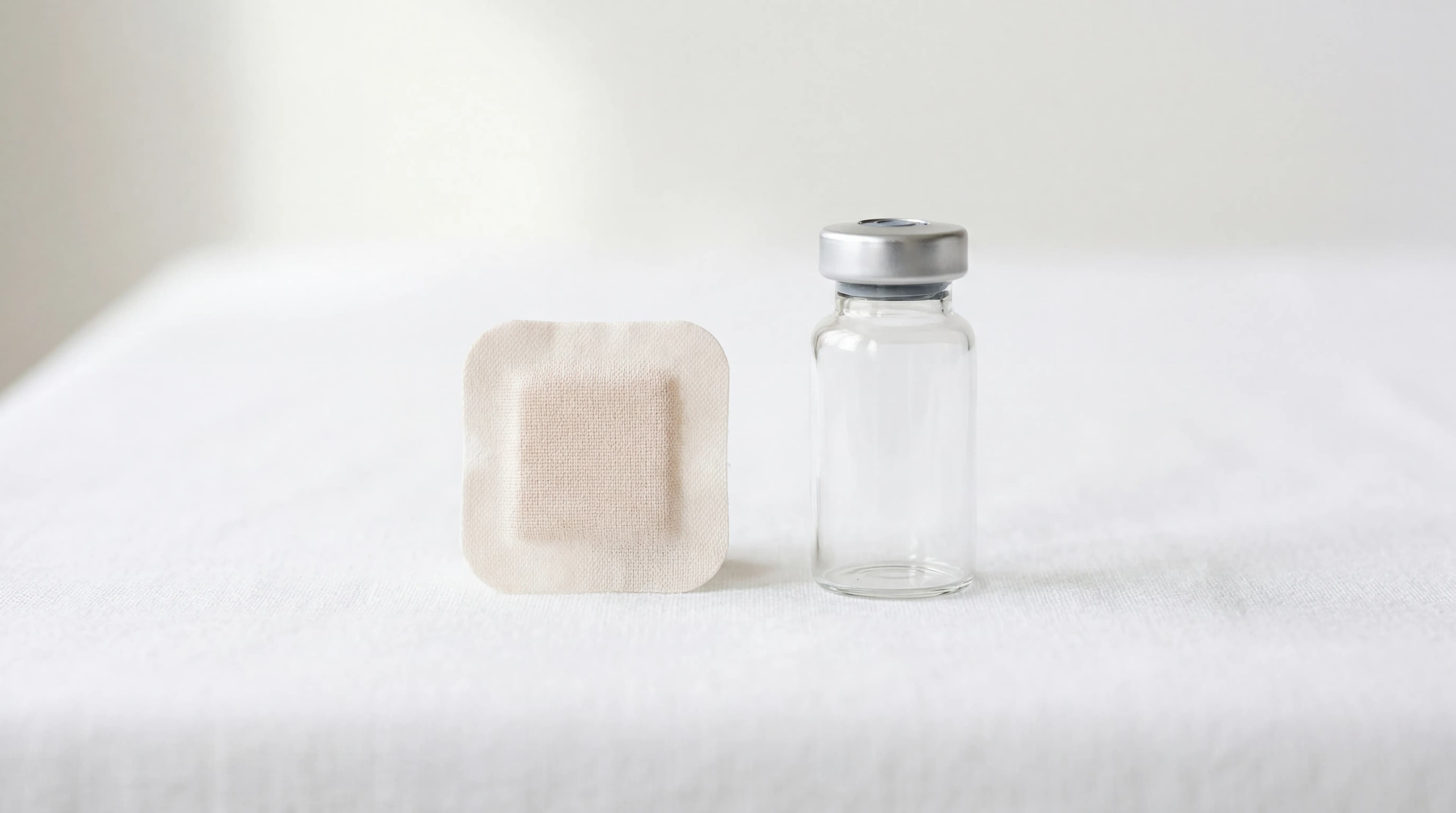
GLP-1 patches are over-the-counter products sold on Amazon, Walmart.com, and supplement websites. Despite their branding, they are not pharmaceutical products and are not regulated by the FDA as drugs. Here's what they typically contain:
| Common Ingredient | Claimed Benefit | Evidence Level |
|---|---|---|
| Berberine | Blood sugar regulation, appetite suppression | Some evidence for modest blood sugar effects in diabetics. No significant weight loss in trials. |
| Chromium picolinate | Insulin sensitivity, reduced cravings | Mixed evidence. Meta-analyses show minimal weight loss (0.5-1 lb over 12-16 weeks). |
| Green tea extract (EGCG) | Metabolism boost, fat oxidation | Modest effect: ~1-2 lbs over 12 weeks in meta-analyses. Not clinically meaningful. |
| Garcinia cambogia (HCA) | Appetite suppression, fat blocking | Multiple meta-analyses show no significant weight loss vs placebo. |
| 5-HTP / Saffron extract | Appetite control, serotonin support | Limited evidence. Some small studies show modest appetite reduction. |
Why Can't GLP-1 Be Delivered via a Patch?
GLP-1 receptor agonists like semaglutide and tirzepatide are large peptide molecules that cannot penetrate the skin through a traditional adhesive patch. The skin's outer layer (stratum corneum) acts as a barrier to molecules above ~500 daltons, semaglutide is approximately 4,114 daltons and tirzepatide is approximately 4,810 daltons. That's roughly 8-10x too large for transdermal delivery.
Researchers are exploring microneedle patch technology that uses tiny dissolving needles to deliver peptides past the skin barrier. A 2025 mouse study demonstrated that transdermal semaglutide delivery via microneedles suppressed appetite and enhanced metabolic rate. However, this technology is still in early preclinical stages, human trials are not expected before 2028 at the earliest, and commercial availability is likely years beyond that.
PharmaTher, a pharmaceutical company, began studying microneedle feasibility for GLP-1 delivery in early 2026, with a long-term goal of delivering one month of medication per application. This is promising but far from available to patients today.
Do GLP-1 Patches Work as Well as Injections?
No, and the gap is not close. Supplement patches produce 0 to 2 lbs in the studies that exist, while prescription semaglutide and tirzepatide produce 15 to 22% of total body weight in the STEP-1 and SURMOUNT-1 trials. The patches also contain no GLP-1 medication at all, so there is no dose to compare in the first place.
| Factor | GLP-1 Patches (OTC) | Prescription GLP-1 (Semaglutide/Tirzepatide) |
|---|---|---|
| Contains GLP-1 medication | No, herbal supplements only | Yes, FDA-approved or compounded GLP-1 receptor agonists |
| FDA approved | No (regulated as dietary supplements) | Yes (Wegovy, Zepbound) or compounded under 503A/503B |
| Average weight loss | 0-2 lbs in studies (not clinically significant) | 15-22% body weight in clinical trials |
| Price | $20 to $60/month | $99 to $449/month depending on provider |
| Prescription required | No | Yes, requires medical consultation |
| Clinical evidence | No large-scale trials for weight loss | Multiple Phase 3 trials (STEP, SURMOUNT) with thousands of participants |
| Side effects | Generally mild (skin irritation) | Nausea, diarrhea, vomiting (most resolve within weeks) |
What Actually Works: Proven GLP-1 Weight Loss Options
If you're looking for effective GLP-1-based weight loss, here are the clinically proven options available through telehealth in 2026:
Compounded injectable semaglutide starts below brand Wegovy cash pricing. It uses semaglutide as the active ingredient but is not FDA-approved as a finished product, and brand-trial outcomes cannot be assumed for a compounded formulation. Published programs include Embody from $79 on a selected plan, Enhance MD at $212/mo on a 12-month plan ($249 month-to-month), and Sprout Health at $149 every 4 weeks for compounded semaglutide. Sprout's current branded availability and prices are not confirmed. See all providers ranked by lowest semaglutide price.
Compounded injectable tirzepatide: This is not the same medication as FDA-approved Zepbound, not an approved generic, and not established by FDA as clinically equivalent. The 20-22% results often cited online come from trials of Eli Lilly's branded product and cannot be assigned to compounded offerings. Current advertised programs include Enhance MD compounded tirzepatide plans, Shed ($299/mo), and Sprout Health (compounded tirzepatide at $199 every 4 weeks). See cheapest tirzepatide prices, and verify formulation, pharmacy, eligibility, and ongoing cost before choosing.
Oral GLP-1 pills, Foundayo (orforglipron) was FDA-approved in April 2026 as a once-daily oral GLP-1 for weight management. It produced approximately 10-12% average weight loss in ATTAIN-1 analyses and is available through LillyDirect at $149-$349/month depending on dose and refill timing.
Not sure which option is best for you? Take our 7-question match quiz to find the best provider based on your budget, insurance, and preferences. Or use our eligibility checker to see if you qualify.
Are GLP-1 Patches a Scam?
"Scam" is a strong word, but GLP-1 patches are, at best, misleading. They are legal to sell as dietary supplements under the DSHEA (Dietary Supplement Health and Education Act), which means they don't need to prove efficacy before going to market. The FTC has warned supplement companies about making unsubstantiated weight loss claims.
- •The ingredients are real but ineffective for significant weight loss. Berberine and green tea have modest metabolic effects, but nothing close to the 15-22% body weight loss produced by prescription GLP-1 medications.
- •The branding is intentionally misleading. Names like "GLP-1 Weight Loss Patch" or "GLP-1 Targeting Patch" imply a connection to pharmaceutical GLP-1 drugs that does not exist.
- •The price is low, but so is the value. At $20 to $60/month, you're paying for ingredients that are available in cheaper pill form. The patch delivery doesn't add meaningful bioavailability.
- •The opportunity cost matters. Every month spent on an ineffective supplement is a month not spent on a proven treatment that could produce real results.
Frequently Asked Questions
Do GLP-1 patches work for weight loss? No. GLP-1 patches do not contain actual GLP-1 medication. They are herbal supplements that have not been shown to produce clinically meaningful weight loss in trials. Evidence-backed FDA-approved options include Wegovy and Zepbound; compounded telehealth paths include Embody from $79 on a selected plan and Enhance MD at $212/mo on a 12-month plan ($249 month-to-month), but compounded products are not FDA-approved finished drugs.
Are GLP-1 patches safe? Generally yes, the herbal ingredients are safe for most people, with minor side effects like skin irritation at the patch site. However, they are not regulated as drugs, so quality and potency can vary between brands. They are not a substitute for FDA-approved or prescribed GLP-1 medications.
Is there a real semaglutide patch coming? Researchers are developing microneedle patches that could deliver semaglutide transdermally. A 2025 mouse study showed promising results, and PharmaTher is studying feasibility in 2026. However, human clinical trials are not expected before 2028, and commercial availability is likely years beyond that.
What is the cheapest real GLP-1 option? Compounded semaglutide through Embody starts at $79/month on a selected plan. If you prefer tirzepatide, Gala lists a $149/month microdose on its current three-month offer, while Enhance MD compounded tirzepatide plans have commitment-specific billing terms. See all providers ranked by lowest price.
Can I get a GLP-1 without injections? Yes. Foundayo (orforglipron) is an FDA-approved once-daily GLP-1 pill available since April 2026 at $149-$349/month through LillyDirect depending on dose and refill timing. Strut Health lists oral compounded semaglutide from $99/month, but FDA warning #721448 over its marketing claims is part of its record. Wellorithm offers needle-free compounded oral dissolving tirzepatide tablets (from $249/mo); compounded products are not FDA-approved finished drugs and branded tirzepatide results do not transfer to them. The Wegovy pill is another FDA-approved oral path.
Sources
- Transdermal Semaglutide in Mice: Body Weight Reduction via Appetite Suppression and Metabolic Enhancement, PubMed Central, 2025
- GLP-1 Patches: Do They Work?, Ro Health, 2026
- GLP-1 Patches: What They Are and Do They Actually Work?, HealthCentral, 2026
- What's Next for GLP-1s?, Harvard Gazette, 2026
- 5 Projected GLP-1 Trends in 2026, GoodRx, 2026
- FTC Health Claims Guidelines, Federal Trade Commission
Medical Disclaimer: This article is for informational purposes only and does not constitute medical advice. Always consult with a qualified healthcare provider before starting any medication. Information is current as of the publication date but may change.
Affiliate Disclosure: Some links in this article are affiliate links. We may earn a commission if you sign up through our links, at no extra cost to you.
Your next useful step
Use the related guide to prepare your questions. Changes to medication or dosing belong with your prescriber.
What the doctors say
Verbatim, independently sourced statements from named physicians and medical bodies, real clinicians quoted with their sources, not a single paid reviewer. General clinical context, not an endorsement of any provider.
“We do not recommend the use of these alternatives. If you use these compounded alternatives, you may not be getting what you hoped for. You may also get something you did not want (other active substances have been found in some compounded versions).”
“More options for people with these challenging diseases will be very helpful, particularly if the new oral tablet medicines are priced reasonably.”
“People with overweight or obesity have individual preferences, and with oral semaglutide as a potential new treatment option, more of those who are not on treatment today may consider starting GLP-1 treatment.”
Quotes are general medical commentary about GLP-1 medications, independently sourced and not solicited by GLP-1 Picks. They are not an endorsement of any provider, our provider scores are set solely by our published methodology.