Our pick · Oct 2026

Embody
from $49/mo
Compounded semaglutide · 12-month plan · $588 up front · checked Oct 27
- LegitScript certified
Our pick is a commercial choice. We may earn a commission when you join.
Does Minnesota Medical Assistance cover GLP-1s for weight loss?
As an adult, you can get Minnesota Medical Assistance to cover a GLP-1 for weight loss only through prior authorization.
You must meet its BMI and other rules, and your records decide whether you qualify. Read the rule and its criteria.
Which drugs Minnesota Medical Assistance covers, and for what:
We checked 3 official documents on October 15, 2026. This is information, not medical advice or a benefit decision.
8 programs that serve Minnesota publish a complete monthly price, from $49 at Embody to $299 at Willow.
Our pick · Oct 2026
from $49/mo
Compounded semaglutide · 12-month plan · $588 up front · checked Oct 27
Our pick is a commercial choice. We may earn a commission when you join.
Some programs are affiliate partners, and we may earn a commission if you join through our link. Payment never moves a row. How we rank
Compounded semaglutide · 12-mo prepay
$588 up front
Advertised program price, not an insurance copay.
Good: 7.6/10 · Compounded
Checked Oct 16, 2026; a rating claim didn't match Trustpilot.
$588 upfront for 12 months of semaglutide. Yearly-plan sale ends December 1; confirm renewal. Paid terms are normally non-refundable; provider-determined medical disqualification allows a refund for the unused term, less services already provided.
The October 27–December 1, 2026 sale offers semaglutide at $49/month equivalent ($588 prepaid for twelve months) and tirzepatide at $99/month equivalent ($1,188 prepaid). One-month plans remain $79 and $129. The published terms say the rate stays fixed on the selected plan. Confirm the renewal amount and date before paying; these sale rates are not month-to-month bills.
We checked this price on Oct 27, 2026.
Full review and sources
12-mo prepay
$1,188 up front
Advertised program price, not an insurance copay.
Fair: 7.3/10 · Compounded
Checked Jul 18, 2026; few independent reviews yet.
$1,188 paid once for the 12-month semaglutide plan; does not renew. Separate monthly subscription: $99 first, then $165. Confirm how four-week vial supplies cover the billing term.
12-month semaglutide one-time plan: $1,188 paid up front, with no renewal. Separate monthly Subscribe and Save is $99 for the first month, then $165. Product pages describe four-week vials; confirm supply coverage across the selected billing term.
We checked this price on Sep 3, 2026.
Full review and sources
Compounded semaglutide · 12-mo prepay
$1,188 up front
Advertised program price, not an insurance copay.
Good: 7.8/10 · Compounded
Checked Oct 16, 2026; a rating claim didn't match Trustpilot.
12-month compounded semaglutide plan: $1,188 billed every 12 months. The shortest plan is $149 every 4 weeks; plans renew until cancelled Compounded Semaglutide (12-month plan): $99 monthly equivalent; $1,188 billed every 12 months. Provider review, medication and shipping included; prescription required; treatment only if clinically appropriate. Checked October 5, 2026. Consultation: included. Shipping: free. The $99/mo semaglutide rate requires $1,188 upfront for 12 months; the shorter $149 plan bills every 4 weeks, not once per calendar month
We checked this price on Oct 5, 2026.
Full review and sources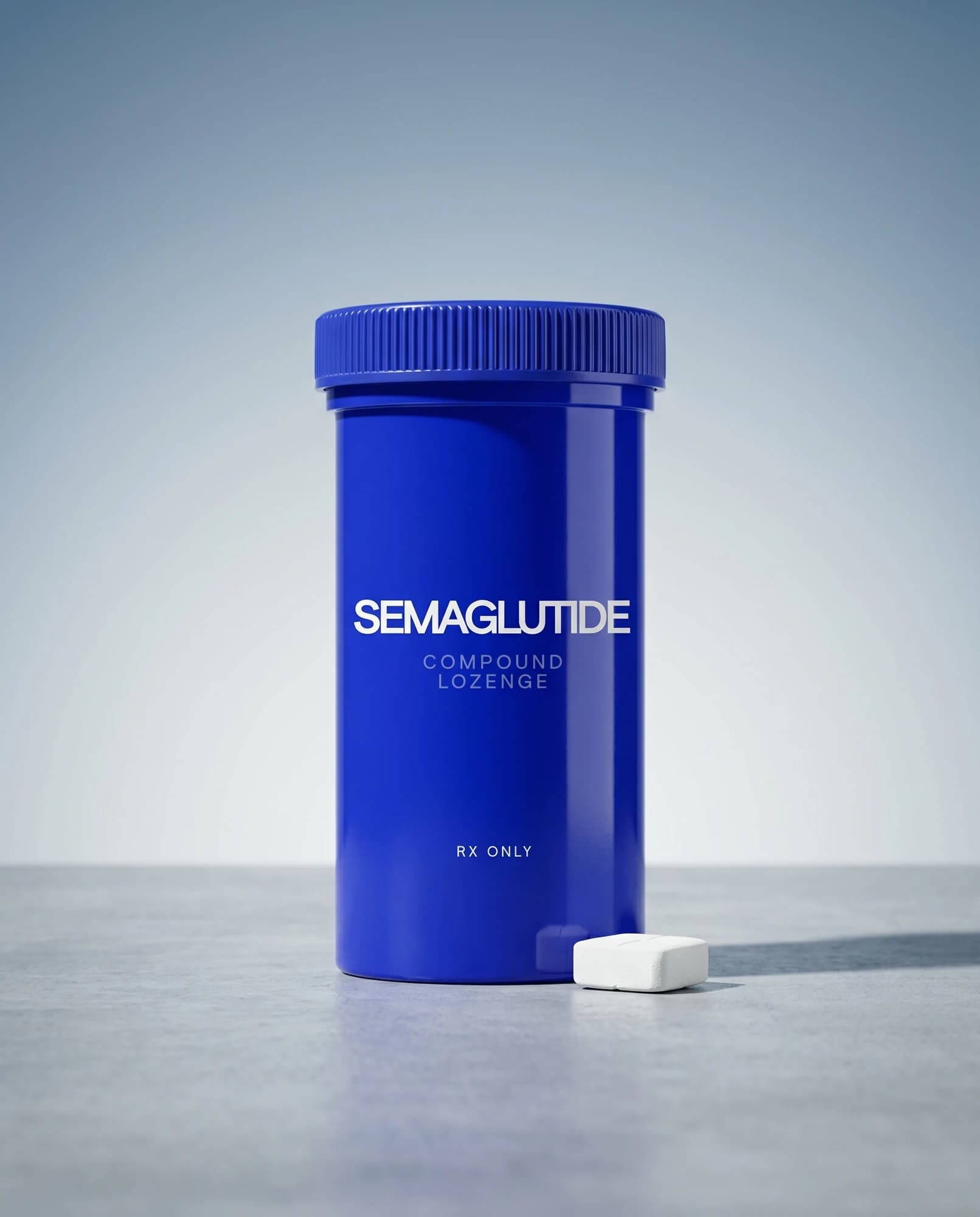
Compounded semaglutide lozenge · auto-refill
Advertised program price, not an insurance copay.
Fair: 6.5/10 · Compounded
Checked Oct 16, 2026.
as low as, auto-refill
We checked this price on Oct 2, 2026.
Full review and sources$99/mo equivalent at Trimi Health
12-mo prepay
$1,188 up front
Advertised program price, not an insurance copay.
Good: 7.6/10 · Compounded
Checked Jul 2, 2026.
$1,188 upfront for 12 months; applicable taxes may add to the bill 12-month prepay: $1,188 upfront ($99 monthly equivalent); does not auto-renew. The separate month-to-month semaglutide plan is $175
We checked this price on Oct 20, 2026.
Full review and sources$212/4 weeks equivalent at Enhance MD

48-week prepay
Advertised program price, not an insurance copay.
Excellent: 9.4/10 · Compounded
Checked Oct 16, 2026; some details not published.
Semaglutide 12-month plan rate, billed every 48 weeks. Shortest plan: $249 every 4 weeks. Confirm the upfront total and any discount.
$212 advertised four-week equivalent on the prepaid 48-week plan, not a calendar-year subscription; shortest plan is $249 billed every 4 weeks
We checked this price on Aug 28, 2026.
Full review and sourcesfrom$297/mo at Direct Meds GLP-1
Confirm the full bill
Advertised program price, not an insurance copay.
Good: 7.5/10 · Compounded
Checked Oct 16, 2026.
Confirm the current prescribed treatment and full bill with the provider.
We checked this price on Sep 3, 2026.
Full review and sourcesConfirm the full bill
Advertised program price, not an insurance copay.
Good: 7.6/10 · Compounded
Checked Oct 16, 2026; a rating claim didn't match Trustpilot.
$299/mo is a starting program price, not one rate for every product. Willow's current help center pricing article lists compounded semaglutide injections at $299/mo up to 3.5 mg and $399/mo at 7 mg, tirzepatide injections at $399/mo through 6.375 mg then $499/mo at 8.5 and 11 mg, $524/mo at 13.5 mg and $549/mo at 17 mg, semaglutide tablets at $299/mo for all listed dosages, and tirzepatide tablets at $399/mo at 6 and 10 mg and $459/mo at 20 mg. Public price schedule checked September 26, 2026; confirm the prescribed product and current quote. Compounded Semaglutide (injectable): Covers medication, consultations, shipping and dose adjustments. $299/mo holds to 3.5 mg, then $399/mo at 7 mg on the help center pricing article, verified 2026-09-03 Compounded Semaglutide (oral tablet, daily): Compounded daily dissolving tablet, $299/mo for all listed dosages in Willow's current help center price schedule. This is distinct from the injection's dose ladder and is not FDA-approved Wegovy. Price checked September 26, 2026. Consultation: included. Shipping: free. The reviewed catalogue lists compounded products; a current brand-name Wegovy or Zepbound offer did not appear there
We checked this price on Sep 26, 2026.
Full review and sources3 more programs serve Minnesota without one complete monthly price: Collective, Maximus and Wellorithm. Compare their terms in the price index.
We left out 29 programs whose service-area list has a caveat for Minnesota or is incomplete, so confirm your address at intake.
A program that serves Minnesota still decides whether to prescribe. Before enrolling, confirm whether it accepts your Medicaid plan and whether your prescribed treatment is covered. The advertised cash prices are not insurance copays. Most listed programs sell compounded semaglutide or tirzepatide, which is not FDA-approved. Check a compounded provider before you pay.
Here is our summary of the Minnesota Medical Assistance rules we checked, with their criteria and limits.
Minnesota Medical Assistance covers GLP-1 medicines for weight loss with prior authorization, under Minnesota Health Care Programs anti-obesity criteria dated August 2026. On the uniform drug list effective August 4, 2026, Minnesota prefers Wegovy injections and Saxenda, lists Zepbound as non-preferred, and does not list Wegovy tablets or Foundayo. As an adult, you need a BMI of 30 or higher, or 27 or higher with a weight-related condition such as high blood pressure, type 2 diabetes or high cholesterol, plus a reduced-calorie diet and more physical activity. To renew after 6 months, you need at least 5% weight loss. Minnesota uses separate criteria for heart-risk reduction, MASH liver disease and moderate to severe sleep apnea. Health plans must use the same drug list, but your plan handles your prior authorization and decides the request. An older fee-for-service exclusions page conflicts with these criteria, so ask your plan to apply the current anti-obesity criteria.
A drug on the preferred list is not covered for every use, so check the rule for yours. A weight-loss exclusion leaves diabetes and other medical requests to their own rules.
We checked MHCP anti-obesity medications PA criteria, August 2026 on October 15, 2026.
We checked MHCP weight management agents PA criteria (cardiovascular, MASH and sleep apnea), August 2026 on October 15, 2026.
We checked Minnesota fee-for-service and managed care uniform preferred drug list, effective August 4, 2026 on October 15, 2026.
Call your Medicaid plan, Medicare drug plan or private insurer with these questions, and keep the reference number for each call.
Before you pay cash, confirm:
An “insurance accepted” badge does not tell you your benefit, so ask your plan how its review works.
Your prescriber sends Minnesota Medical Assistance a request with the records that show you meet the rule for your drug and diagnosis, and Minnesota Medical Assistance decides.
What Minnesota Medical Assistance's own criteria ask for, from the documents we read:
What your prescriber usually sends:
Your prescriber works from these Minnesota Medical Assistance documents:
Your prescriber's office files the request; you cannot file it yourself. If Minnesota Medical Assistance says no, ask for the reason in writing, because the notice tells you how to ask for a review and by when.
Medicare's GLP-1 Bridge follows federal rules in every state, so Minnesota Medical Assistance's policy does not decide your Medicare benefit.
We checked CMS's Bridge guidance for Part D plans on September 26, 2026.
Two free official services can help you, and we earn no commission from either.
Minnesota Medical Assistance covers GLP-1 medicines for weight loss with prior authorization, under Minnesota Health Care Programs anti-obesity criteria dated August 2026.
On the uniform drug list effective August 4, 2026, Minnesota prefers Wegovy injections and Saxenda, lists Zepbound as non-preferred, and does not list Wegovy tablets or Foundayo. As an adult, you need a BMI of 30 or higher, or 27 or higher with a weight-related condition such as high blood pressure, type 2 diabetes or high cholesterol, plus a reduced-calorie diet and more physical activity. To renew after 6 months, you need at least 5% weight loss. Minnesota uses separate criteria for heart-risk reduction, MASH liver disease and moderate to severe sleep apnea. Health plans must use the same drug list, but your plan handles your prior authorization and decides the request. An older fee-for-service exclusions page conflicts with these criteria, so ask your plan to apply the current anti-obesity criteria. Before you pay, confirm your exact drug, your diagnosis, any age rules and your plan's authorization steps.
Yes.
Medicare's GLP-1 Bridge follows federal eligibility rules in every state, not Minnesota Medical Assistance's policy. Your ordinary Part D coverage depends on your prescription and your drug plan, and the Bridge runs its own eligibility and authorization review.
Yes, from 11 online programs that publish a service area including Minnesota.
At intake, confirm your address, the exact medication and any pharmacy limits, because a state listing does not guarantee you a prescription or a delivery date.
Among programs that serve Minnesota, the lowest complete monthly price we found is $49 at Embody.
Across the 10 compounded programs we track nationally, the median advertised recurring price is $124/mo, from $49 to $299. That national figure is not a measured Minnesota average, insurance copay or quote for your dose.
Affiliate partners we feature. We may earn a commission.
Check the medication, commitment and total price for your selected plan.
Affiliate links, we earn a commission at no extra cost to you. These are featured partners, prioritized by our affiliate economics, not an editorial "best" ranking. Published scores have different evidence limits and do not establish better care. See the program comparison and scoring limitations.